What This Series Is
You already know physics. You just don't know you know it.
When you say "I can't get momentum on this project," you're using — momentum equals mass times velocity. When you say "that organization has too much inertia to change," you're using — it takes force to accelerate a massive object. When you say "things fall apart if you don't maintain them," you're using the second law of thermodynamics — entropy increases in closed systems.
These aren't metaphors borrowed from physics. They're physics. The same mathematical structure that describes a ball rolling downhill describes a habit resisting change, an organization resisting reform, and a belief resisting evidence. What differs is the state space — the set of possible values the system can take. Position is one state space. Belief intensity is another. Organizational structure is another. The equations are the same.
This series starts with things you already understand — messy desks, stubborn habits, organizational dysfunction, arguments that go nowhere — and shows you the physics that's already operating. Each post introduces one concept from the formal framework of Epimechanics, but you won't need the framework to follow the argument. The physics will be obvious once you see it.
The Posts
Foundations (what everything is made of)
| Post | The everyday thing | The physics | The Epimechanics concept |
|---|---|---|---|
| Why Your Desk Gets Messy | Desks, rooms, inboxes tend toward disorder | Second law: entropy increases without energy input | Entropy , free energy |
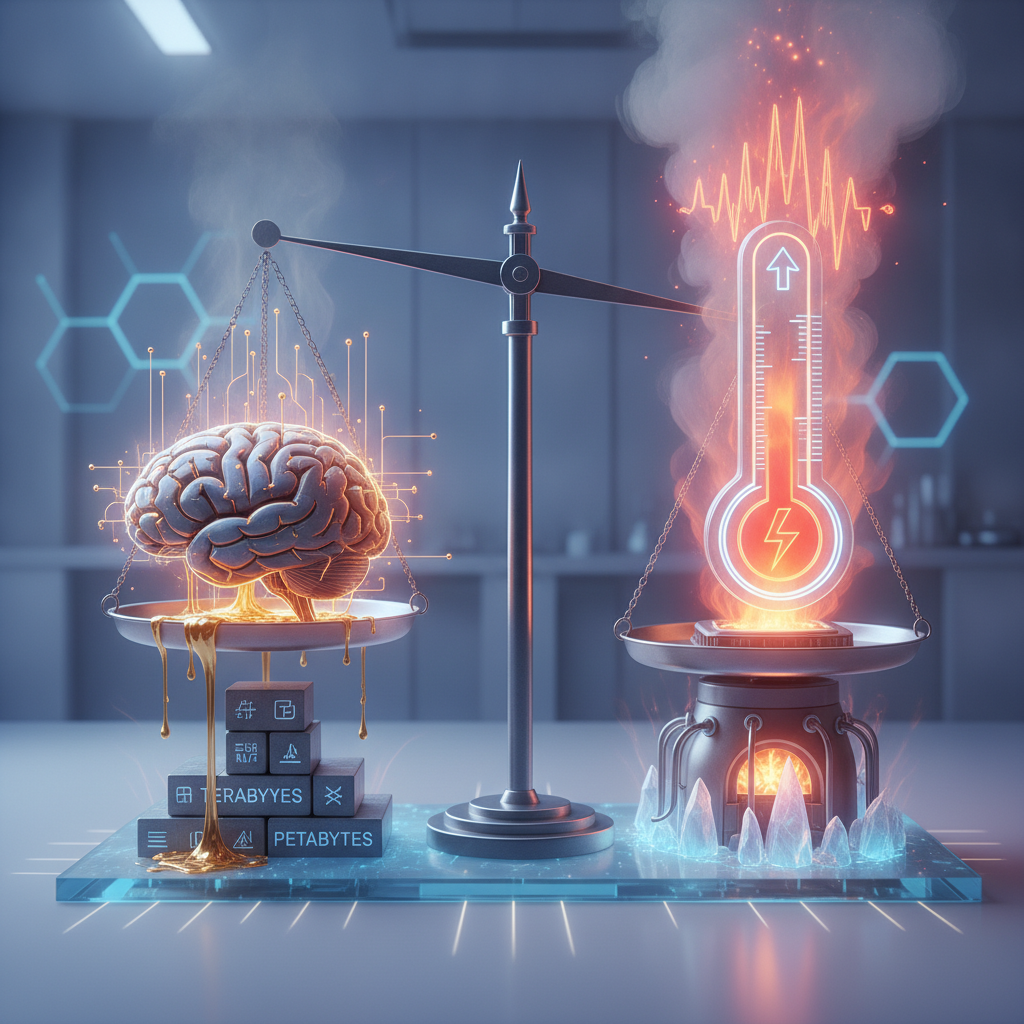
| Why It Costs Energy to Know Things | Learning is tiring; forgetting is easy | Landauer's principle: information has thermodynamic cost | Internal energy , entropy of knowledge |
| Why Some Things Last and Others Don't | Diamonds vs. sandcastles | Stability basins: depth of energy minimum determines durability | Basin depth , bond strength |
Motion and resistance (why things change or don't)
| Post | The everyday thing | The physics | The Epimechanics concept |
|---|---|---|---|
| Why Habits Are Hard to Break | Old habits persist; new ones don't stick | Mass = resistance to acceleration; habits have high | Generalized mass , mass tensor |
| Why Arguments Don't Change Minds | Evidence bounces off strong beliefs | Force must overcome mass; beliefs resist differently in different directions | Anisotropic mass, force-matching |
| Why Crises Accelerate Change | Things that were stuck suddenly move fast during crises | The cross-term: losing structure while in motion = rocket shedding mass | variable-mass dynamics |
| Why You Can't Stop a Rumor | Rumors spread; corrections don't catch up | Field propagation at finite speed; first-mover advantage in state space | Field , propagation speed |
Systems and scale (why groups behave differently from individuals)
| Post | The everyday thing | The physics | The Epimechanics concept |
|---|---|---|---|
| Why Organizations Get Slow | Startups are fast; corporations are slow | Mass grows with internal structure; viscosity resists differential motion | growth, viscosity |
| Why Good Intentions Go Wrong | Incentive structures produce the opposite of what they intend | Potential landscape: entities roll toward attractors, not toward intentions | Potential , landscape vs. force interventions |
| Why Everything Has a Breaking Point | Markets crash, teams fracture, patience snaps | Phase transitions: gradual pressure → sudden qualitative change | Phase transitions, critical slowing down |
| Why Adding People Makes Things Worse | More cooks spoil the broth; more engineers slow the project | Negative returns to energy in high-temperature systems; hiring adds heat not work | , coordination cost |
Deeper patterns (why the world works this way)
| Post | The everyday thing | The physics | The Epimechanics concept |
|---|---|---|---|
| Why Your House Costs More Than You Think | Ownership = ongoing maintenance, not just purchase price | Entropy production rate vs. repair rate; maintenance ≠ mass | Atomic decomposition: |
| Why Some Ideas Survive and Others Don't | Religions persist; fads don't | Mimetic fitness: loop structure, basin depth, and transmission fidelity | Auto-causal density , soul |
| Why You Can't Predict the Future (But Can Predict the Pattern) | Individual events are unpredictable; statistical patterns are reliable | Thermodynamics predicts aggregates, not individuals; temperature, not trajectories | Temperature , Reynolds number |
| Why the Best Description Wins | Good explanations compress; bad ones sprawl | The optimal representation minimizes prediction cost | Representational Efficiency principle |
How This Connects
Each post is self-contained — you don't need to read the series in order or know any physics. But together they build the complete Epimechanics framework from the ground up:
- Foundations → Part 1: Generalized Mechanics and Part 00: Atomic Structure
- Motion and resistance → Part 1 and Part 1b: Representations and Coordinates
- Systems and scale → Part 2: Meta-Entities and Applications: Efficiency Limits
- Deeper patterns → Part 5: Ontology and Part 00: Atomic Structure
Related posts (now in this collection)
- Daily Entropy — entropy as fundamental force
- Daily Physics — physics principles in everyday life
- Entropy, Durability, and Complexity — why complex things are fragile
- Potential Entropy — entropy's force toward disorder
- The Energy of Knowledge — information has thermodynamic cost
- Time Destroyers — unnecessary complexity as recursive time-sinks
- Thermodynamics of System Resilience — maintenance/disruption energy ratio
- A Lightbulb in a Closet — the cost of unshared creation (in main musings)
The Core Claim
The gap between "common sense" and "physics" is a gap between informal intuition and formal structure. You already know that messy desks take energy to clean, that habits resist change, that organizations get slow, that arguments bounce off strong beliefs. You know the physics. What you don't have is the equations — the formal relationships that connect these observations into a single framework where insights from one domain transfer to another.
That's what Epimechanics provides. And this series is the bridge.