
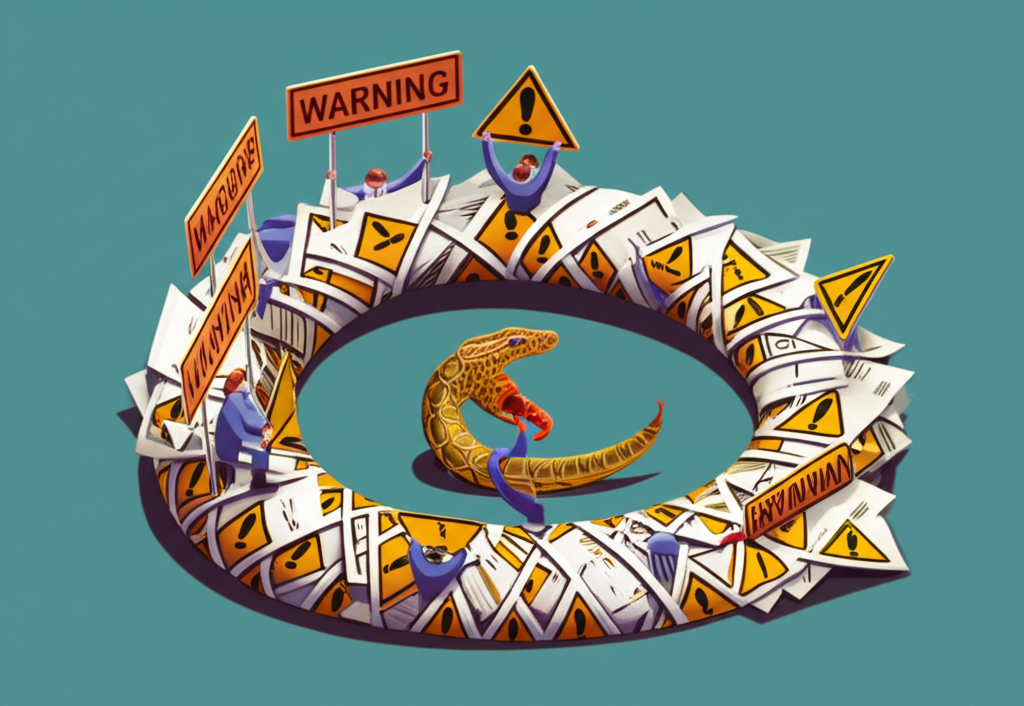
The most dangerous predictions are the ones that cause themselves.
The Doomer Logic
The AI doomer position, simplified:
- AI is becoming extremely powerful
- Powerful AI in the wrong hands = existential risk
- Therefore, we need aggressive regulation to prevent catastrophe
- Call for moratoriums, licensing, government control
The logic seems sound. The fear seems justified. The conclusion seems reasonable.
But logic that ignores political reality is not logic at all. It is fantasy.
The Regulatory Capture Problem
Every regulatory apparatus in history has been subject to capture by the entities it was meant to regulate. This is not cynicism—it is empirical observation.
Financial regulation: Captured by large banks, barriers erected against smaller competitors Pharmaceutical regulation: Captured by pharma giants, barriers against generics and innovators Telecom regulation: Captured by incumbents, barriers against new entrants Energy regulation: Captured by fossil fuel interests, barriers against alternatives
Why would AI regulation be different?
Who Benefits from AI Regulation?
Let us be precise about who gains from aggressive AI regulation:
Large AI incumbents (OpenAI, Google, Meta, Anthropic):
- Already have the resources to comply with complex regulations
- Barriers to entry eliminate competition
- Regulatory moats replace technical moats
Authoritarian governments (China, Russia, etc.):
- Domestic development continues unchecked
- Western competitors hamstrung by their own regulations
- Geopolitical AI advantage shifts
Incumbents in all industries:
- AI-enabled disruption slowed or prevented
- Current market positions protected
- Innovation contained within controllable bounds
Who loses?:
- Open source AI development
- Small AI startups
- Democratic nations' competitive position
- The public's access to transformative technology
The Self-Fulfilling Prophecy
Here is where the trap closes:
Step 1: Doomers advocate for aggressive AI regulation, citing existential risk.
Step 2: Governments, eager to control a transformative technology, implement regulatory frameworks.
Step 3: Regulatory frameworks are captured by incumbents and shaped by authoritarian interests.
Step 4: AI development concentrates in the hands of a few large entities—exactly the "singleton AI" scenario doomers warned against.
Step 5: These concentrated AI powers, now protected by regulation from competition, become the very threat doomers feared.
Step 6: The doom arrives—not despite the regulation, but because of it.
The prophecy fulfills itself.
The Concentration Dynamic
Consider the current trajectory with and without aggressive regulation:
Without aggressive regulation:
- Many AI labs compete
- Open source models proliferate
- Power is distributed
- No single entity dominates
- Checks and balances emerge organically
With aggressive regulation:
- Small labs cannot comply, shut down
- Open source criminalized or marginalized
- Only well-resourced entities survive
- Power concentrates in regulated oligopoly
- Regulatory capture completes the cycle
Which scenario is more likely to produce the "AI controlled by small group of bad actors" that doomers fear?
The Authoritarianism Vector
The regulatory apparatus demanded by doomers is the exact apparatus authoritarians need.
Licensing requirements = government decides who can develop AI Compute restrictions = government controls access to infrastructure Model registration = government surveillance of AI systems Capability limits = government defines acceptable technology
In a democracy, these powers are dangerous. In an authoritarian context, they are weapons.
And as we have seen historically, democratic institutions are not immune to authoritarian capture. The tools created for safety can be repurposed for control.
The Competition Angle
The entities that survive aggressive AI regulation are not necessarily the safest. They are the most politically connected.
Regulatory survival skills:
- Lobbying capability
- Compliance infrastructure
- Political relationships
- Legal resources
Technical survival skills:
- Innovation
- Safety research
- Alignment work
- Open development
These are not the same. The entities that win in a regulatory environment are selected for political fitness, not technical safety.
The Alternative Path
If concentration is the danger, then distribution is the solution.
Open source AI: Power distributed across many actors Compute democratization: Access not controlled by gatekeepers Transparency requirements: Openness rather than licensing Liability frameworks: Accountability without gatekeeping International coordination: Prevent regulatory arbitrage without authoritarian capture
The goal should be an AI ecosystem that is:
- Distributed (no single point of control)
- Competitive (innovation not captured)
- Transparent (behavior visible)
- Accountable (consequences for harm)
Aggressive licensing and moratoriums achieve none of these goals. They achieve the opposite.
The Irony
The deepest irony: doomers who fear AI controlled by a small group of bad actors are advocating for the exact policy that will produce AI controlled by a small group of actors.
Whether those actors are "bad" depends on your perspective. But the concentration of power is the common factor in every doom scenario—and aggressive regulation accelerates concentration.
The doomers may achieve their prophecy. Just not in the way they intended.
The Uncomfortable Truth
AI safety is important. The risks are real. The concerns are legitimate.
But the solution cannot be "hand control to governments and hope they use it well."
Governments are captured. Regulators are captured. Power concentrates in the hands of those who seek it.
The doomer who demands aggressive regulation is demanding the exact power structure that produces the doom they fear. They are not preventing catastrophe. They are ensuring it.
What Should Replace Doomer Advocacy?
Focus on distribution, not control:
- Open source support
- Compute democratization
- Transparency standards
- Interoperability requirements
Focus on accountability, not gatekeeping:
- Clear liability frameworks
- Insurance requirements
- Harm remediation processes
- Individual recourse mechanisms
Focus on capabilities, not prohibitions:
- Red team requirements
- Safety benchmarks
- Transparency reports
- Independent auditing
Focus on international coordination, not unilateral restrictions:
- Prevent regulatory arbitrage
- Share safety research
- Coordinate on genuine risks
- Avoid capture by authoritarian interests
The Choice
We are at a fork:
Path A: Aggressive regulation → regulatory capture → AI concentration → digital authoritarianism → the doom that was feared
Path B: Distributed development → competitive ecosystem → many actors → checks and balances → a future worth wanting
The doomers are choosing Path A while believing they're preventing doom.
The self-fulfilling prophecy is already in motion.
The question is whether we recognize it before it completes.
Related reading: