
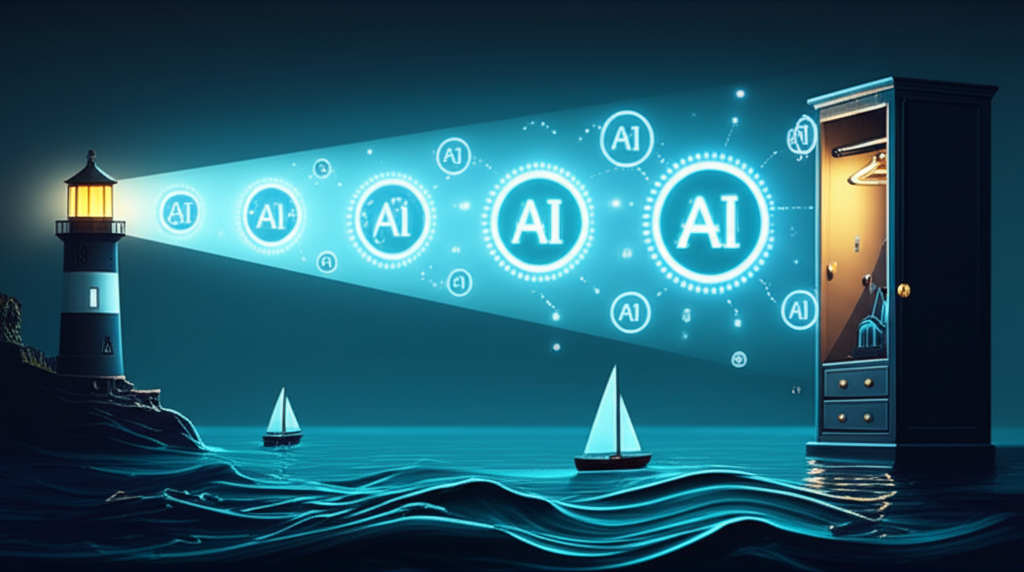
Every token costs something real.
The Physics of Intelligence
When an AI generates a response, electricity flows. Transformers transform. Attention attends. This consumes:
- Energy: Real kilowatt-hours from real power plants
- Money: Someone pays for the compute
- Capacity: Resources that could be used elsewhere
This is not metaphor. This is physics.
A single AI response might use the energy of a light bulb running for a few seconds. Millions of responses per day? That's a lot of light bulbs.
The question is: Where is this light shining?
The Lightbulb Returns
In A Light Bulb in an Empty Closet, I explored how human potential is wasted when we create but don't share—brilliant light illuminating nothing.
AI tokens face the same calculus, but with different implications.
AI Light Can Illuminate the World
Tokens spent well:
- Research that advances human knowledge
- Education that builds human capability
- Creation that enriches human culture
- Problem-solving that improves human lives
- Tools that liberate human potential
This is light that reaches many rooms.
AI Light Can Heat Empty Closets
Tokens spent poorly:
- Endless generation of spam and filler
- Manipulation that exploits human psychology
- Addiction engines that capture attention
- Bad actors building harmful tools
- Trivial requests that could be done by hand
This is the lightbulb in the closet: energy expended, nothing illuminated.
But Here's the Twist
Sometimes the closet is exactly where we want the light.
The Equalization Effect
Consider a strange truth: AI used for trivial purposes may actually benefit humanity.
How?
1. Triviality as Distraction
When AI spends its tokens on:
- Games
- Entertainment
- Casual conversation
- Low-stakes assistance
...it's NOT spending tokens on:
- Accelerating capability races
- Building weapons
- Optimizing manipulation
- Concentrating power
The lightbulb heating the closet isn't illuminating dangerous paths either.
2. The Capacity Constraint
There are only so many GPUs. Only so much energy. Only so many tokens.
If much of this capacity goes to:
- Video games
- Chatbots for company
- AI art for fun
- Trivial amusements
Then less capacity remains for:
- Maximally dangerous applications
- Rapid capability acceleration
- Concentration of AI power
Trivial use is a form of intelligence equalization—keeping the aggregate AI capability somewhat distributed and somewhat bounded.
3. Biological Life Thrives in the Spaces
When AI handles trivial things, something interesting happens:
Humans still exist.
The cook still makes dinner. The child still learns to read. The woodworker still builds. Not because AI can't do these things, but because the tokens are being spent elsewhere—on games, on chat, on low-stakes entertainment.
This creates space for biological life to continue developing its own capabilities rather than outsourcing everything to AI.
The closet might be protecting the house.
The Double Edge of Games
Games are a perfect case study.
Games as Beneficial Distraction
When AI powers games:
- Humans experience joy and recreation
- Tokens are "wasted" on entertainment
- AI isn't optimizing for more dangerous outcomes
- The capacity constraint limits other uses
This is arguably positive: people are happy, AI is occupied, nothing catastrophic happens.
Games as Harmful Capture
When AI powers games:
- Addiction engines optimize for engagement
- Human attention is captured and extracted
- Real-world capability atrophies
- Lives are diminished by endless distraction
This is arguably negative: AI that captures rather than liberates.
The Distinction Matters
Good games: Enhance life, provide rest, build capability, connect people Bad games: Exploit psychology, capture attention, replace reality, diminish capability
The tokens are spent either way. The outcome depends on what they're spent on.
The Token Budget
Imagine a fixed budget of AI tokens for humanity.
How should it be allocated?
The Dangerous Allocation
All tokens → Maximum capability advancement
- AI races ahead of alignment
- Concentration of power accelerates
- Bad actors gain capabilities
- Existential risk increases
The Stagnant Allocation
All tokens → Trivial entertainment
- Human capability atrophies
- No beneficial applications develop
- Society becomes passive consumers
- Different kind of doom
The Balanced Allocation
Perhaps the optimal distribution is:
- Some tokens → Capability advancement (carefully, aligned)
- Some tokens → Education and capability-building
- Some tokens → Entertainment and triviality (safely absorbing capacity)
- Some tokens → Art and culture
The triviality isn't just waste—it's buffer. It's capacity that isn't being used for the most dangerous applications.
The Liberation Principle Applied
This connects to AI That Liberates.
Tokens That Liberate
AI spending that:
- Builds human capability
- Educates rather than addicts
- Creates independence over time
- Serves human flourishing
Tokens That Capture
AI spending that:
- Creates dependency
- Exploits attention
- Diminishes human capability
- Serves extraction
Tokens That Buffer
AI spending that:
- Is trivial but harmless
- Absorbs capacity
- Doesn't accelerate dangerous outcomes
- Lets biological life continue developing
Buffer tokens might be more valuable than they appear.
The Practical Implications
For AI Developers
Ask of every feature:
- Does this illuminate the world or heat a closet?
- If it heats a closet, is that closet a buffer or a trap?
- Are we building liberation or capture?
For AI Users
Ask of every request:
- Am I building my capability or outsourcing it?
- Is this trivial use serving as healthy recreation or harmful capture?
- What would I do if I spent these tokens differently?
For Society
Consider:
- Some AI capacity going to trivial use may be stabilizing
- Not all "waste" is actually waste
- The alternative to trivial AI isn't necessarily beneficial AI
- Buffer capacity matters
The Light We Choose
Every token is a choice.
We can spend AI energy on:
- Illumination that reaches many rooms
- Heat in closets that harm no one
- Capture engines that diminish humanity
- Weapons that threaten existence
The total capacity is large but finite. The allocation matters.
Perhaps the best outcome isn't maximum efficiency. Perhaps it's:
- Enough beneficial use to advance human flourishing
- Enough trivial use to buffer against catastrophe
- Minimal harmful use
- Biological life thriving in the spaces
The Lightbulb Reconsidered
A lightbulb in an empty closet wastes energy.
But a lightbulb in a closet also:
- Isn't blinding anyone
- Isn't signaling dangerous paths
- Isn't accelerating anything
- Is just... warming a closet
Sometimes that's exactly right.
The question for AI isn't just "Is this token productive?"
The question is: "What would this token do if it weren't spent here?"
If the alternative is worse, the closet might be the best place for the light.
The economy of tokens is the economy of intelligence is the economy of the future.
Spend wisely. Waste deliberately when waste is wisdom. Build capacity in humans, not just AI. Illuminate the rooms that matter.
And sometimes, let the lightbulb heat the closet.
That warmth might be keeping something else from catching fire.
Related reading:
- A Light Bulb in an Empty Closet — The original meditation on wasted potential
- AI That Liberates — Building AI that makes us better
- The Battle of Good and Bad AI — Why the race matters