
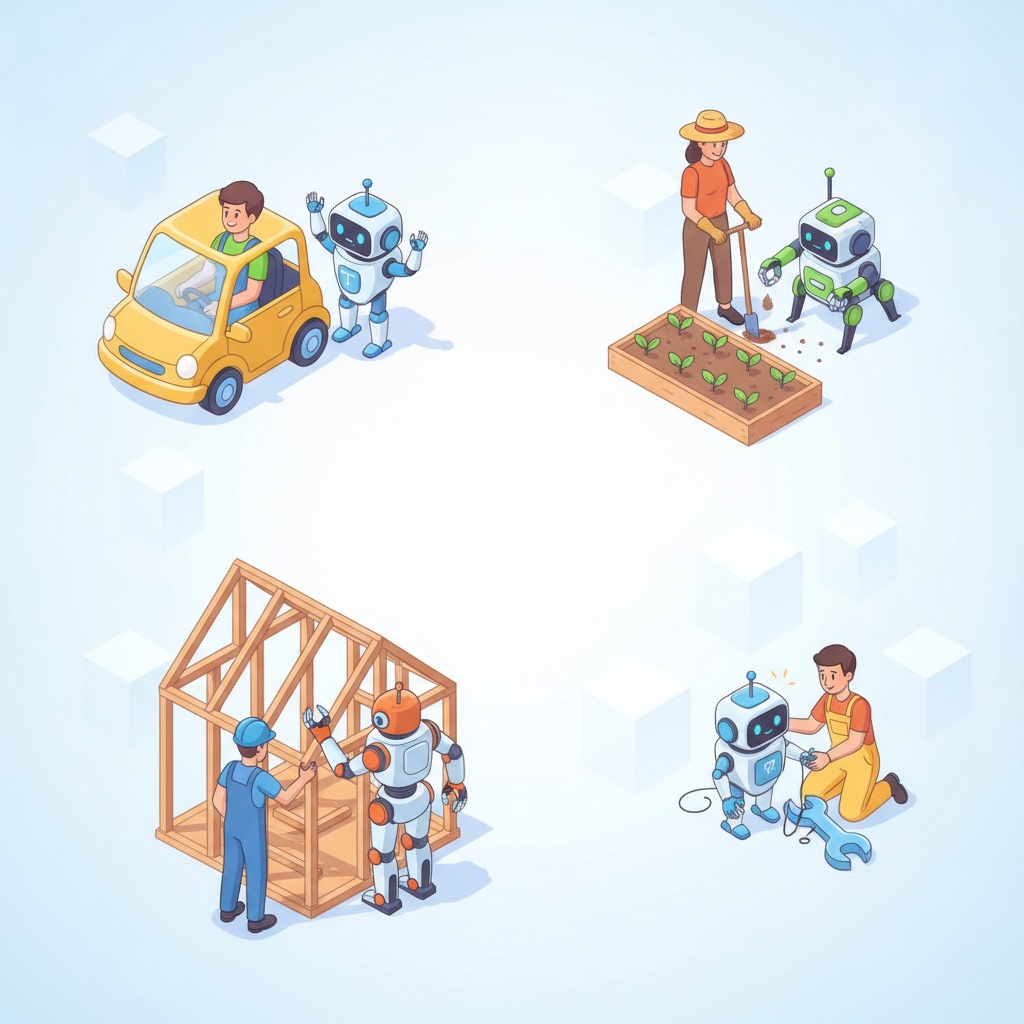
The future is great if we can work together.
I'm hopeful about AI. To me, a good future means AI helps people, and people keep their skills and their control. It also means we keep giving back to people, because people are very important at every stage.
The phrase "machines of loving grace" comes from Richard Brautigan's 1967 poem "All Watched Over by Machines of Loving Grace." Dario Amodei used it in 2024 as the title of an essay about AI. Machines of loving grace are machines that help people. I want humans of loving grace too. We need both.
We also have to be careful with how we build AI. People should stay aware of where it's going and stay in charge of it.
People and machines together
I've written that a kind of general intelligence already exists in organizations of people and computers, and that AI is turning it into what I call Distributed Super Intelligence. People are part of it, so it is only as good as the people in it.
The danger is Stupid Super Intelligence. It's a system that's very capable at a narrow job and very sure of itself. It causes harm and gains nothing. A system can be very capable and still stupid. That is far more dangerous than a wiser super intelligence that is a little less capable.
What we do to make it the best
1. Prevent AI backlash
If people get hurt by AI and nobody helps them, they'll turn against it. That's the backlash. In The AI Peace Corps I wrote about what to do: help the people who are affected, with food, jobs, housing and community. That's giving back to people. When people feel AI helping them, they trust it.
2. Prevent deskilling
When a machine takes over a skill for us, we start to depend on that machine. The more we depend on it, the more it matters that we can still do the job ourselves.
Surgeons are a good example. Surgeons and AI should work together. If the AI can do part of the work better, it should also help teach the surgeon. That way people stay as capable as they can be at the work that is approved.
3. A person can always do what is essential to live
Everyone should keep the basics. Drive a car. Plant food. Build a house. Fix a robot.
Even if a car can drive itself, I'd still like people to learn how to drive. Maybe it becomes a hobby. It stays something people can do, and they keep the skill. If they ever need it, they have it. There are ways to keep that possible, and the law can help.
For critical machinery, we need laws that say a person must always be able to take over. What I want is a control switch, a way for a person to take charge when it matters. It doesn't have to be a kill switch. People should be able to take back control of anything that could end up overpowering their lives.
Working together
With AI that helps people, and people who keep their skills and stay in control, we can build that future together.
Keep reading
- Distributed Super Intelligence: general intelligence already exists in organizations of people and computers; AI is growing it into super intelligence, and it needs oversight, governance and separate parts so no single system takes over.
- Stupid Super Intelligence: The Real Existential Threat: why a capable, overconfident, narrow system is more dangerous than a thoughtful one.
- The AI Peace Corps: helping people with food, jobs, housing and community, before AI gets blamed for everything.
- Humans of Loving Grace: a response to Dario Amodei's essay, on what AI learns from our record of conflict, and how people can give it a better record to learn from.